
By Djamshid Assadi
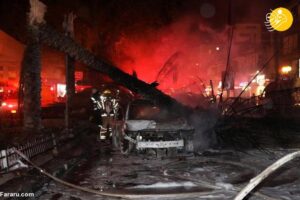
Four days after the drone attack on key Saudi Arabian oil facilities on September 15, backed by the Islamic Republic of Iran (IRI) according to many observers, U.S. President Donald Trump directs the Treasury Department to “substantially increase” sanctions on Iran. Unwilling to deploy a military action because of its costs and unexpected consequences, the strategy of the maximum economic pressure on Tehran is the irreplaceable strategy that Trump pursues to have IRI renegotiating a new deal.
Since his withdrawal in May 2018 from the Joint Comprehensive Plan of Action (JCPOA), a nuclear deal signed in 2015 between the Islamic regime and the five permanent UN Security Council members plus Germany, the sanctions follow one another.
In November 5, the U.S. Treasury imposes penalties on more than 700 Iranian and Iranian-linked individuals, entities, aircraft and vessels. The move brings to more than 900 the number of Iran-related targets sanctioned by the Trump administration in less than two years. Among those are 50 Iranian banks and subsidiaries, more than 200 people and ships, Iran’s state-run airline Iran Air and more than 65 of its planes. The U.S. sanctions freeze any assets that those targeted have in US jurisdictions. They bar Americans from doing business with them and affect non-American companies that deal with sanctioned Iranian firms and officials.
In May 2019, tougher sanctions target steel, petrochemical industries and the Islamic regime’s elite military force as a foreign terrorist organization. In addition, exemptions granted to eight countries to purchase Iranian oil are lifted.
In June, new sanctions target, in addition to Khamenei, eight senior commanders of the Islamic Revolutionary Guards Corps (IRGC). The United States also blacklisted Iranian Foreign Minister Mohammad Javad Zarif, whose US assets were frozen on August 1.
On Wednesday 18 of September 2019, declares to announce details of new sanctions within 48 hours in response to a missile or drone attack on Saudi oil facilities that Riyadh.
The damaging impacts of sanctions on the Islamic regime’s economy
The U.S. sanctions hurt more deeply than the Islamic regime hoped. Iran’s economy shrinks in 2019 for the second consecutive year. Based on World Bank estimates, Iran’s economic growth is expected to shrink by 3 to 6 percent in coming months this year.
Oil exports fall from 2.5 million barrels per day out of a production of more than 3.8 million before the sanctions to about 300,000 in in June 2019 and less than 200,000 barrels a day now. The sanctions also hamper much-needed investment in the country. Years of sanctions and underinvestment mean the country’s refining sector relatively lags its Gulf neighbors which have invested billions of dollars to create some of the world’s most complex refineries.
Most of oil exports are shipped out to repay debt and or to registered as credit, not to earn hard currency. The IRI cannot repatriate hard currency it earns from oil sales in international trade. The issue is not technically a “dollar” issue, it is a currency issue.
Dragged down by oil production collapse, many economic sectors suffer. The housing and construction market, the second industrial sector activity after oil and before car, drops-off in sales. Banking system ruins. Insolvent banks and the government borrow money from the Central bank to support failing companies to pay workers and avoid protests. The Central Bank floods the economy with liquidity. In this, little is done to address the money-laundering issues flagged by international watchdogs at the Financial Action Task Force.
Recession drives unemployment. The national employment deteriorates even for the well-educated. A third of men and half of women under thirty with college degrees are unemployed. 44% of Iran’s unemployed have a college degree. 20,000 people start doctoral programs every year, but there are only jobs for 4,000-5,000 of them. The official statistics in Iran consider one hour of work weekly as employment. Independent economists have a much higher estimates of both unemployment and inflation.
Inflation officially approaches 40 percent. Many economists suspect it is much higher. Prices for many foodstuffs double or triple. So far, Iranian officials might envisage measures to supply essential commodities such as bread, rice, sugar and meat to the low-income strata of society. This has formerly helped, but also ignited corruption and mismanagement.
The combination of unemployment and inflation ignites the “misery index”, an informal measure of the state of an economy generated by adding together the rate of inflation and the rate of unemployment, reached 39% last winter, whereas a year earlier it stood at 19.4% according to the latest report by the Statistical Center of Iran (SCI). The income of millions of workers now is around $100 monthly, well below the country’s poverty-line estimates. In 2018, the value of the Iranian currency shrinks by two-thirds,
Oil sales account for some 80 percent of all state income in Iran. The current low level of oil export and earning thwarts the Islamic government’s ability to run its regular operations such as financing the many state-run businesses and institutions which represent 60 percent of budget expenditures. Rohani’s government has also difficulties to finance imports of essential products and fund destabilizing activities in the region. In the absence of transparency, assessments estimate Iran’s reserves of foreign currencies between 25 and 100 $ billion.
The parity of the national money, Rial, also deteriorates with galloping inflation. Since late September 2018, the state puts pressure on traders to control by force the exchange rate drop. The regime arrested numerous traders and imposed the death sentences on at least two purveyors of gold and foreign exchange. The rate artificially stabilized for a while, but finally settled at about 140,000 rials to the U.S. dollar, three times its rate around March 21, the Iranian New Year.
The recession has, however, decreased the demand for foreign currency since the enforcement of sanctions. Controversial fiat exchange rates drain public finances and enrich corrupt elites. The Central Bank announced on October 20 the provision of $9.5 billion at an official rate of 42,000 Rials per dollar for essential goods. However, extensive evidence suggests that many of these goods are sold at prices that echo the free market rate of about 12-14000 Rials per dollar. Adding to these issues, the shadow economy also develops in detriment of the domestic welfare.
Imports decrease and non-oil exports increase $13.7 billion from April to September 2018, compared to $11.1 billion a year earlier. However, in the Islamic national statistics, exports of oil-based elaborate products are considered as those of non-oil.
Any hope that European countries which support the JCPOA could even partially counterbalance the re-imposition of U.S. sanctions waned. These countries offer an alternative European payment system to the dollar-based one, called INSTEX, also referred to as a Special Purpose Vehicle. However, none of these countries can compel their banks and companies to do business with Iran, and even if they could, they have no interest in placing their own economies and industries in the crosshairs of the U.S. Treasury Department. European firms and financial institutions rushed to disengage from their post-JCPOA forays into the Iranian market. At this point, INSTEX is focusing on providing Iran with food, medicine, and medical device. But then again, these products are not by definition under sanctions.
Maleficent rent-seeking origin of a bankrupt economy
The impact of U.S. “maximum pressure” on IRI’s economy is undeniably significant. However, sanctions have not caused the economic difficulties in Iran. They have worsened a shaky economy. After two decades of steady economic growth in 1960s and 1970s, massive nationalizations and expropriations since the inception of the Islamic regime in 1979 have replaced entrepreneurship and industrial production by rent-seeking long before any sanction emergence. The expropriated companies handed over to affiliated military, religious and kindship rent-seekers, have progressively disappeared.
In 1977, Iran was the world’s 18th largest economy, Turkey was 20th, and Korea 28th. In 2017, Iran ranked the 28th, Turkey the 19th, and Korea the 12th. In 1977, the year before the start of unrest in 1978 and in the revolution in 1979, Iran’s economy was 26 percent larger than Turkey’s and 65 percent higher than Korea’s. In 2017, Iran’s nominal GDP was 2.4 and 7.2 times smaller than Turkey’s and Korea’s. In 1980, the first year if the Islamic regime, Iran’s nominal GDP per capita of $2,374 was still higher than that of $2,169 in Turkey and $1,711 in Korea. In 2018, it was smaller, $4,838 in Iran, compared to $11,125 in Turkey and $32,774 in Korea.
The IRI’s economic freedom scores is 51.1, making its economy the 155th freest in the 2019 Index. Iran is ranked 13th among 14 countries in the Middle East and North Africa region, and its overall score is below the regional and world averages.
Powerful interest groups, mostly linked to the Pasdaran, the revolutionary guard formed after the Islamic revolution of 1979, and religious establishments, are opposed to the pursuit of economic liberalization and reengagement with the global economy. The Islamic Revolutionary Guard Corps (IRGC)’s penchant for building dams—600 in the last thirty years, compared to 14 in the shah’s last twenty years—considerably enriches its proponents, but unfortunately causes environmental problems such as diverting water to inefficient agricultural projects and exposing this rare source to the burning Sun of a very warm country. In response to numerous environmental activists’ protests, the IRGC arrests them. However, Hassan Rouhani and his administration do not seem to enterprise any option to these forces as they both belong to and appreciate the same regime. All Rouhani asks them is being more tolerant to his government and policies at least for the remaining until 2021.
In mid-October 2018, more than thirty economists met with President Hassan Rouhani on October 15 to share their concerns about the government’s “politically motivated”, “short-term” decisions, and the questionable quality of people on its economic team. This was not the first warning the Iranian economists address to the Islamic governments. Hassan Rouhani reacted as the previous governments had done: ignoring!
Inescapable confrontation?
Trump and his administration believe the strategy of the maximum economic pressure is working to bring the ISI back to the negotiating table. The Americans continue to insist on a list of 12 demands that ISI must comply before sanctions could be lifted. Among others, stopping missile programs, ending support to Middle East terrorist groups, like Hezbollah, Hamas and the Palestinian Islamic Jihad, and removing all troops under its command from Syria and demobilize Shiite militias in Iraq.
IRI denies difficulties and specifies, at least publicly, that it does not renew any negotiations with the U.S. unless the U.S. significantly relieve les sanctions. In addition, IRI defies not only America but also other European and regional countries. In February 2019, the IRI announced the “successful test” of a new cruise missile, “Hoveizeh”, with a range of over 1,350 kilometers. Later, the Islamic regime is accused of having attacked several international oil tankers in or near the Strait of Hormuz, the world’s most important energy corridor, and some pipeline infrastructure in Saudi Arabia and the United Arab Emirates in June 2019 and downed a U.S. Military drone. Progressively, IRI walks away from the limits imposed on it in the nuclear deal by exceeding the 300 kilograms of low enriched uranium it can have on hand and now enriching above the 3.67 percent allowed under the terms of the understanding. There is now growing evidence that the drone and missile attack launched against Saudi Arabian oil fields on September 15, 2019 originated in Iran.
Considering the positions, it is hard to see how the parties can climb down from escalating tensions.
Is there any way out of this quagmire though? Three scenarios stand out:
1) Conciliation between belligerents. Mediation for reconciliating has been unsuccessful between IRI and USA up to now as the unsuccessful as the Japanese, French and other efforts witness.
2) Regional “Cold war”. Many believe in a kind of “Cold war” between a world power and regional power for whom peace is impossible and war is improbable. They recognize their respective interests for avoiding costly escalations. In this perspective, America might finally accept to reinstate waivers for some countries to buy Iranian oil and an Islamic regime might comply with the nuclear deal again and commitment behind the scenes for some additions to the JCPOA.
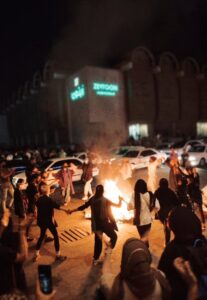
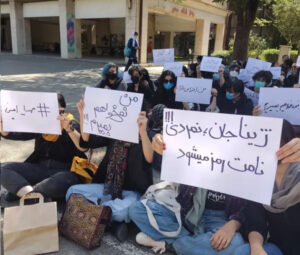
3) National resurrection. A less probable, but emerging, scenario is a radical change in Iran, either out or from within the establishment to replace the ideological regime by a pragmatic and hopefully a democratic state. Increasingly, many Iranians publicly now blame the Islamic regime for general hardship and the growing tougher life for who. One of the major slogans in demonstrations is: “The enemy is not America, our enemy is right here.”
The opinion expressed do not necessarily reflect those of ITC