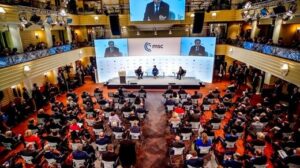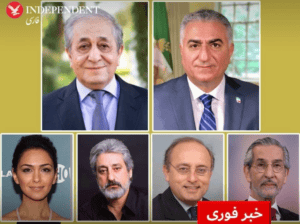

On Thursday April 17th, members of the Iran Transition Council (ITC) held an online meeting with the representative of the Dutch Liberal Party (VVD), Mr. Sven Koopmans. The delegation included: Ms. Golaleh Sharafkandi, Mr. Mehran Barati, Mr. Mohsen Sazegara, Mr. Shahriar Ahy, Mr. Hamid Aghaei, Mr. Jamshid Assadi and Mr. Kaveh Shirzad.
Mehran Barati thanked the Dutch government for its decades of commitment to the cause of human rights in Iran at the beginning of the conversation. He also thanked Dutch NGOs for their support of civil society initiatives in Iran, especially support for women’s rights projects. Mr Koopmans was asked to extend ITC’s thanks to the Prime Minister and members of the Dutch government.
Subsequently, Mohsen Sazegara gave a detailed and statistical report on the health crisis in Iran and the government’s incompetence in tackling the crisis. He stressed, “The government is incapable of coping with the existing and expanding crisis. This government will not be able to prevent millions of Iranians from being infected with the Covid19 Virus, and once again we witness the Islamic Republic’s leadership system has collapsed”.
ITC spokesman, Mr. Shahriar Ahy, then spoke about the international situation and ITC’s policy and highlighted the two upcoming crises that are likely to heavily impact European countries in the future. These two crises are the increase in the number of refugees and the energy shortage, especially oil shortage. The collapse of the Iranian regime and the continuing lack of security in Iran will make both crises worse for European countries. Ahy emphasized that in such a situation only a credible and strong alternative power structure could bring these crises under control and give the region the urgently-needed stability.
Ms. Golaleh Sharafkandi then followed and explained Transitional Council’s specific expectations from Western governments in that no money be made available to the government in Tehran. Instead, medical and other help should be sent to Iran through World Health Organization and charities and given directly to affected institutions. She added, “We respect the policies of the European Union and understand that Europe wants to find better solutions in relation to Tehran, solutions that are inconsistent with US policies. But Iranian people today need the support and help of international community more than ever. Europe must in no way contribute to the revitalization of the Iranian ruling system.” Ms. Sharafkandi stated, “We at ITC can provide all international institutions with the required specialized knowledge on the actual needs for help, both in terms of the list of all required medical products and equipment, food and related matters as well as the possibility of monitoring Aid routes. The most important thing is that the Islamic Republic is forced to open its gates to the international community. ITC expects that human rights, women’s and ethnic rights, and religious minorities’ rights be not marginalized in negotiations with the government of the Islamic Republic. Another delegation member, Mr. Jamshid Assadi, explained in a short speech the economic situation in Iran.
At the end of the conversation, Mr. Koopmans thanked ITC delegation for the open discussion and suggested to keep in touch. He would also introduce ITC to other liberal parties in Europe.