The question I have is: The U.S. left the deal first, so why are you guys saying that it’s Iran’s responsibility to come back into compliance before you do? I mean, if the United States abandoned the deal, isn’t it the U.S.’s responsibility to come back into compliance first and then Iran would follow suit?
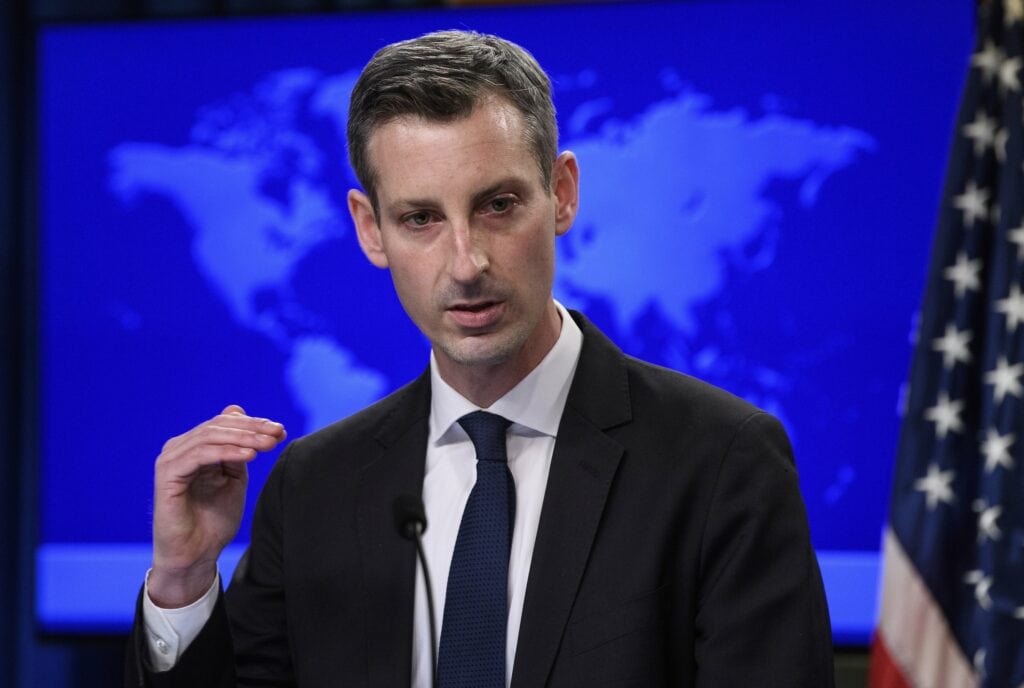
MR PRICE: Well, I think it is also true that Iran has distanced itself from the JCPOA in very profound ways as well, as we have discussed. So right now, what we’re doing, as I alluded to yesterday, we are doing exactly what you heard from Secretary-designate – at the time – Blinken. We are undertaking careful and close consultations with our partners, with our allies, with members of Congress. There has been a proposition that President Biden put on the table. I am not out here to negotiate in public with any country, and we’re not there yet, frankly. We are still undertaking those close consultations with partners, allies, members of Congress, and we’ll take it from there.
QUESTION: But would that include – I mean, are you thinking about the possibility of offering them some signal, some relief that would – outside of sanctions relief that would send a signal about the seriousness of your intent?
MR PRICE: So when it comes to those signals, again, that’s something we want to make sure we’ve coordinated closely and calibrated closely with partners, allies, and that we have consulted closely with members of Congress as well. So again, this is – today is February 3rd. We’re less than two weeks into this administration. We were serious when we said that we want to take those – undertake those consultations with a range of parties, and that’s precisely what we’re doing.
QUESTION: On Iran, is it the administration’s view that Iran is about three weeks away from having enough enriched uranium for a nuclear weapon? And if so, where – what is the assessment based on?
MR PRICE: So any assessment like that would be necessarily classified. I know there have been press reports. I know there was one press report overnight that pointed to a six-month breakout time.
I think what you have heard us say – well, you’ve heard us say a couple things. Number one, when Iran was fully complying with the Iran deal, that time was 12 months. Now that Iran has been in a position to distance itself from those strict protocols, that strict verification and monitoring regime, Iran is closer. That breakout time is shorter. But I wouldn’t want to characterize that from here.
Our goal, consistent with our goal to keep Iran’s nuclear program in a box and to ensure that it can never obtain a nuclear weapon, is to make that breakout time as long as possible, and to have those verifiable measures in place to make sure that Iran can never obtain a nuclear weapon.
QUESTION: So when Secretary Blinken raised this in his interview about “weeks away,” he was just referring to public media reports?
MR PRICE: He didn’t say that. I think you’re misquoting him. What he said is that Iran, if left on its current trajectory, could one day be within weeks. He was not speaking about the present. He was speaking about a continuation of the status quo if left unchecked. It’s precisely why we’re approaching this with such great urgency, again, starting those consultations right off the bat – partners, allies, members of Congress.
Still on Iran? Yes.
QUESTION: Yeah. I’m sure you saw the reports yesterday that Iran had brought on more centrifuges online. And given that this is a deepening of violations of the JCPOA, given that you see Israel come ahead, Israeli officials close to Netanyahu saying that with – if Iran gets closer to building a bomb that it will have no choice but to launch some military action, is there a redline in Iran’s production of nuclear capability that the United States would say no, we cannot rejoin this agreement?
MR PRICE: I’m not going to set a specific timeframe from the podium, certainly not today. I think what we can say is what I said before: We want that breakout time to be as long as possible. We want to make sure that we have verifiable restrictions in place on the type of activity that the Iranians can undertake. That’s precisely why, again, starting very early in this administration, we are setting out about this challenge to make sure that we can lengthen that breakout time and, again, verifiably prevent Iran from ever obtaining a nuclear weapon.
QUESTION: To clarify my question, I’m not asking about a timeline. I’m asking about actions. For example, Iran has also said that it may not let the IAEA inspect some of its sites. Would that be a redline?
MR PRICE: Again, I would point to the consultations that we’re undertaking. The sorts of decisions you’re pointing to is not something the United States would want to undertake alone or would want to consider or contemplate alone. We entered the Iran deal in 2015 with the P5+1. We are – those are a set of allies and, in a couple cases, tactical partners that we want to make sure we are coordinating with; again, members of Congress as well.
So I don’t want to set any redlines from here, certainly not today. Again, we’re not here to negotiate from the podium. We’re here to undertake those consultations, in the first instance, behind closed doors.
QUESTION: Sorry, can I —
QUESTION: Do you have a reaction to the ICJ’s ruling today allowing Iran’s lawsuit against the U.S. on sanctions to move ahead?
MR PRICE: I do. I think in the first instance, I would say that we have great respect for the International Court of Justice. At the same time, we are disappointed that the court did not accept our well-founded legal arguments that the case Iran brought is outside the court’s jurisdiction and the court should not hear it. While we do not agree with the court’s reasoning, today’s judgment is a preliminary ruling, not a decision on the merits. While Iran may seek to frame this decision as somehow supporting its view on the merits, the ICJ’s rule – the – excuse me – the ICJ’s rules and case law make plain that a decision on preliminary objections does not prejudge the merits.
In the next phase of this case, we’ll explain why Iran’s claim has no merits. We remain clear-eyed about the dangers posed by Iran’s malign activities, and that’s, again, why we are undertaking the important diplomacy that we are at the moment and undertaking those consultations that I’ve referred to.
Still on Iran?
QUESTION: Yeah.
QUESTION: Can we stay on Iran just for one second? It’ll take —
MR PRICE: I – well, Michel, go ahead.
QUESTION: Yeah, thank you. News reports said that Secretary Blinken has asked Iran envoy Rob Malley to form a negotiating team made up of diplomats and experts with a range of views on the path forward with Iran. Do you have any names? And is the team set and ready to work on forward?
MR PRICE: So Special Envoy Malley just started late last week on Friday, so this is literally day four or so for him on the job. You are right that the Secretary across the board wants to ensure that our thinking, that our approach is never dominated by groupthink, that we are always incorporating an appropriate diversity of views, and of course that is no different when it comes to Iran. As soon as we have additional members of the team to announce, we’ll be happy to let you know.
Others on Iran?
QUESTION: Well, just – I just wanted to get one thing straight here. When you’re talking about what the Secretary said in his interview, that if left on its current trajectory, Iran could be weeks away from getting – does it not stand to follow then that also if left on its current trajectory, Iran could be hours away or minutes away from developing a weapon? I mean, the longer it goes without there any – there being any constraints or without Iran recognizing or respecting any constraints, doesn’t it flow, doesn’t it follow naturally that they will get closer and closer to that? And so this idea of weeks really could be days, could be hours, could be minutes, right? Is that not – does that not follow logically?
MR PRICE: I think the —
QUESTION: If it is – if it continues on its current trajectory.
MR PRICE: Sure, you can take any argument to the extreme, any argument to the absurd. I think what we are saying here —
QUESTION: Well, I don’t think it’s absurd at all, but —
MR PRICE: I think what we are saying here is that we are approaching this challenge with urgency because we understand that with Iran not currently complying with its obligations under the JCPOA, this challenge does grow more acute, and that’s exactly why we are undertaking these consultations.