The armed forces of the Middle Eastern countries (except the IDF), including Iran and Iraq, have always been under the command of the country’s autocratic leaders, and based on the country’s constitution have never enjoyed independence. And when the leader, who commanded the army, has lost control, the command structure has been confused for some time, and at times it has been completely dissolved.
The Iranian Artesh (Regular Armed Forces) has never been a national Artesh. Although the Artesh, during the Pahlavi era, enjoyed a structure like that of a national one, but it always served under the Shah of Iran, not the elected government. At the time of the Islamic Revolution in 1979, and the departure of Mohammad Reza Shah from Iran, Artesh lost its direct commander and failed to maintain the necessary cohesion of a national Artesh.
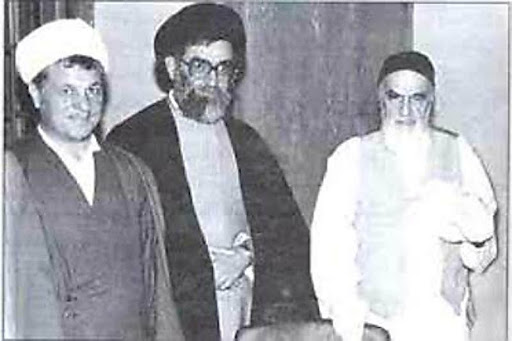
Ayatollah Khomeini and the revolutionary leaders, fearing a military coup d’état, neutralized the Artesh command structure by executing generals and retiring many commanders, and with the failed Nojeh coup d’état, they became more concerned; hence, Artesh lost its efficiency in terms of command structure. On the other hand, Ayatollah Khomeini’s idea of exporting the Islamic Revolution to Iraq and other countries in the Middle East, made the neighboring countries more exasperated. Iraq’s Shiites make up most Iraqis, and for this reason, Saddam Hussein was more concerned among the other Middle Eastern leaders. The Western world was also concerned with the export of the Islamic Revolution for its own interests, that is import of Middle Eastern crude petroleum in the 1970s. The leaders of other countries, such as Kuwait, a small country compare with Iran, for its own survival, offered financial support to Iraq around $30 million. The other countries such as Saudi Arabia an Emirates were also anxious to donate to Saddam Hussein for a military strike on Iran.
This situation, which marked an uncertain future in the Middle East, and especially to prevent the spread of Islamic revolution, led Saddam Hussein to seize the opportunity and attack Iran with Iraq coherent armed forces. Iraq’s Army advanced in Khuzestan until it reached Andimeshk without facing any form of military confrontation; Khomeini had already disintegrated the Artesh command structure. Iraq could have even advanced right up to Tehran without any resistance should have they decided to. But for the fear of being trapoed, Iraq Armed Forces stopped at this point. Despite the lack of a command structure, a nationalistic motive arose among the Artesh personnel, somewhat regaining its lost cohesion, confronted the Iraqi armed forces, defeated them and pushed them back to Iraq.
It has been much speculation that it was the Western world’s decision to start the Iran-Iraq war to economically bankrupt both strong countries in the region. It must be said, the Iran-Iraq War was to prevent the export of the Islamic Revolution to the other countries in the Middle East, especially Iraq, and the support of the Western worlds was to protect its own interests; the import of the Middle East oil needed by Western industries. Therefore, the idea that the Western world was behind the Iran-Iraq war is only a speculation!
After the war with Iraq, the fear of Khomeini and the leaders of the Islamic Revolution did not diminish, and to preserve the Islamic Revolution, they began to equip the IRGC as much as possible and the “Revolutionary Guards Force” in parallel with the Iranian Artesh was created. For the creation of IRGC, most of the Artesh’s budget was swallowed up, preventing the Artesh to modernize, however, Artesh maintained its cohesion and has continued so far. The Artesh with its present structure is still capable to defend the country against any military attacks to preserve Iran’s integrity.
Hence, the Artesh has somehow kept the structure of a national army, and the Iranian military personnel hope that after the overthrow of the Islamic regime, the Iranian people will determine the aims, objectives and functions of the Iran Artesh in a new constitution. In summary, the functions of the Artesh are to defend and support the country’s security and independence, including protecting the land, sea and air borders, protecting territorial integrity and defending the national governance, also assistance to people during natural emergencies such as floods, earthquakes, storms, volcanoes, communicable diseases and the like.
The Iranians’ hope for reding themselves of the Islamic regime rests mostly with the Iranian military personnel and expect that Artesh will not only support the integrity of the country and national sovereignty, but also defend the lives and wellbeing of the people during crisis. It must be said, in the war between Iran and Iraq, the Artesh remained loyal to its commitment in maintaining the country’s integrity. “It is known, the main mission of the Artesh is to preserve the territorial integrity, to defend the sovereignty of the people, and to do so, the Artesh must prepare itself in various dimensions, we need to know the threats of the future and prepare ourselves accordingly, and fortunately this important task has happened, and the Artesh is fully prepared to carry out its missions” said Admiral Habibollah Sayyari, deputy Artesh coordinator. In this regard, the commander of the Artesh, Maj. Gen. Abdolrahim Mousavi, on Artesh’s Day, April18, 2020, said, “Iran can keep its flag waving, Artesh will preserve the authority and dignity of the nation in the world, this is the way the nation has chosen and the Artesh, which is part of this nation, has chosen this path.” The statements by Sayyari and Mousavi will further encourage he integrity of the Artesh military personnel.
There is no doubt that Iran National Armed Forces will abide by their oath for their mission, and as have proved in the Iran-Iraq war, will continue to maintain the territorial integrity of the country, defend the sovereignty of the Iranian people, and stand with the Iranian people when necessary.
Given the above, the speculation surrounding the Iran-Iraq War, known as “it was the work of the Western world,” may not be true.
Commander Mohammad Farsi
September 18, 2021


