The recent events in Afghanistan have made us think we know what regime collapse looks like. Militias roaming the streets, soldiers scrambling to helicopters, up against the clock to escape the anarchy below. But in some instances, the reality can be far more mundane. Across from Afghanistan’s own border, another Islamic theocracy — Iran — is struggling to manage a dangerous water shortage. As one hardline Muslim regime arose in Central Asia this year, another could yet be at the very beginning of its fall.
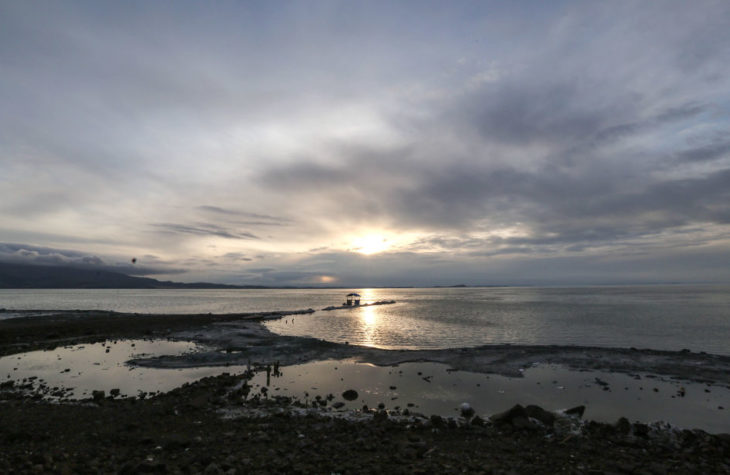
In July, during the worst drought in half a century and scorching heat of over 120°F, protests erupted in the oil-rich province of Khuzestan as a water crisis that has been slowly bubbling for decades hit boiling point. With at least 700 villages without a drop of water, and 28 million people facing shortages, the protests quickly spread to other provinces and turned political. Even the censored state-run media was forced to acknowledge the dire situation, as the shortages affected all sections of society: urban and rural. Today, these protests show no sign of abating and indeed merely foreshadow what may lay ahead.
It is a crisis entirely of Tehran’s own making, notionally led by an 82-year-old Ayatollah Khamenei, but in reality coordinated by the Islamic Revolutionary Guard Corps, the same military force formerly headed by Qasem Soleimani. Since the end of the Iran-Iraq war in 1988, the ayatollahs have secured the IRGC’s ongoing support by finding ways to keep them busy during peacetime. They have done so by awarding their IRGC protectors contracts to build dams, irrespective of need. The figures are staggering. There were 13 dams built in total under the Shah. Since the 1979 revolution, more than 600 have gone up, often diverting puny water supplies from poor to rich populations.
Read more: https://spectatorworld.com/topic/iran-dammed-water-crisis/


