
By purging veteran politicians, abandoning the pretense of free elections, and letting the welfare state decay, Tehran is playing with fire.
Ray TakeyhJanuary 19, 2022, 4:10 PM
A few months into his presidency, Iranian President Ebrahim Raisi is already in trouble. Although the commentariat has focused on his nuclear truculence, Raisi is facing both elite defection and mass protest at home. His stewardship of the economy and his nuclear diplomacy are widely questioned. Unless Supreme Leader Ali Khamenei and his most ardent disciple make important changes in their approach to the great powers, they may endanger the republic they are committed to preserving.
Iran’s economy has been battered by a combination of mismanagement, the pandemic, and sanctions. The inflation rate hovers around 40 percent and the currency has lost much of its value. In the meantime, Raisi is pledging an 8 percent growth rate and creation of nearly two million jobs in the next two years.
These are fanciful notions, as Iran’s economy cannot be revived without sanctions relief. Only when the wall of sanctions cracks, can Iran sell more of its oil and repatriate its funds frozen in foreign banks.
The idea that trade with China can sustain a nation of 85 million people is equally flawed. Selling around half a million barrels of oil a day to China at discount prices is hardly a judicious economic plan. The Iranian officials tout their 25-year deal with China, but thus far the promised investments have yet to materialize as Beijing has been reluctant to inject massive sums in a sanctioned Iran. Indeed, for an Islamist regime that insists on notions of self-sufficiency and self-reliance, to become a vassal state for China hardly enhances its political fortunes.
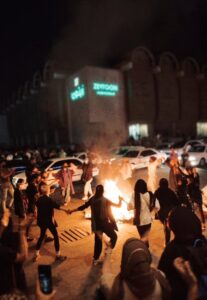
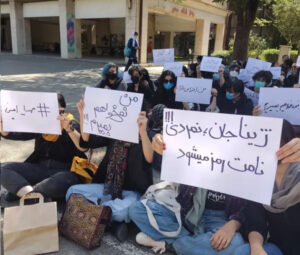
Despite impressions of autocratic stability, Iran is a land of demonstrations and strikes. In the past few years, the working class that was once considered a reliable pillar of support for the regime has joined other segments of society in opposition. Raisi’s brief tenure has already seen its share of convulsions.
In November, the city of Isfahan was rocked by farmers complaining about the government’s diversion of water needed for their crops. As usual, economic grievances quickly turned to politics with chants of “death to Khamenei.” In the meantime, teachers took to the streets in more than 50 cities demanding a raise. The government quelled all this with brutal use of force, further undermining its tattered legitimacy.
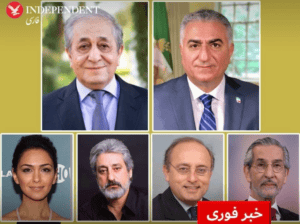
The Islamic Republic is skilled at turning its dedicated supporters into dissidents. In the aftermath of the contested 2009 presidential election, the reform movement was equated with sedition and Iran’s most popular politicians were excised from body politic. The problem for the government is that the reform movement’s leaders are still the most popular politicians in Iran.
For an Islamist regime that insists on notions of self-sufficiency and self-reliance, to become a vassal state for China hardly enhances its political fortunes.
Their goal of creating a regime that is democratic in practice but religious in character may have been thwarted by the hardliners, but they do command a unique place in the popular imagination. This is why the only way the government can stop them from winning elections is through mass disqualifications of their candidates.
The reform faction has been quick to issue warmings to the government that, unless it changes course, it is courting disaster. In a stinging rebuke of Raisi’s diplomacy, the reform movement issued a widely circulated letter, stressing, “At a time when the Iranian nation is facing economic exhaustion, a delay in returning to the Joint Comprehensive Plan of Action will further damage the country.”
This call was joined by the centrist National Trust Party that was created by Mehdi Karubi, a former speaker of the parliament, and a 2009 presidential candidate who continues to languish under house arrest. A leading figure in the party, Ismail Gerami, has warned Raisi that his government is risking mass unrest: “It is natural that when people fall below the poverty line, they will choose protest.” But these and other voices are being ignored.
The 2021 presidential election was one of the most consequential in the history of the Islamic Republic. It was an occasion where the regime turned on its own, disqualifying conservatives with a long history of service to the theocracy. Khamenei demonstrated that he will brook no disagreement. The predicament of two stalwarts of the revolution, former speaker of the parliament Ali Larijani and former president Hassan Rouhani reveals how Iran’s elite circle is narrowing.