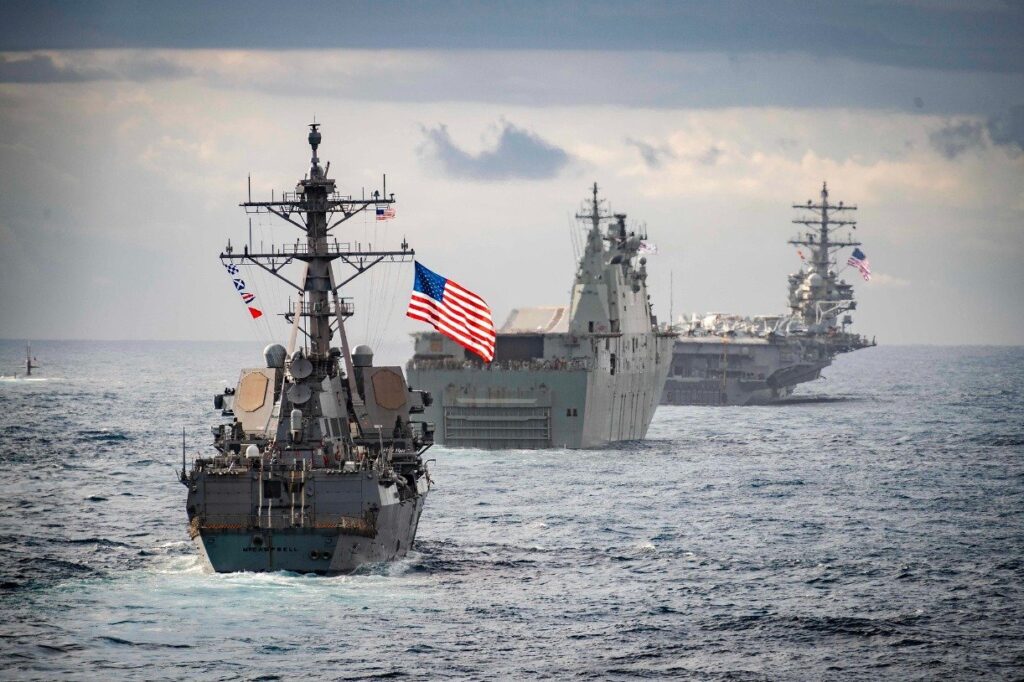
It is clear that the U.S. strategy of being a guarantor of the world order is at a point where the costs are higher than the benefits. A policy of cascading realism allows multiple poles of global power and interests, which might accommodate the needs of more powers than the current state of global affairs.
ussia’s saber-rattling around Ukraine and its demand that NATO return to its 1997 borders at least de facto if not de jure took the world by surprise. Even more surprising will be the People’s Republic of China’s final moves toward subduing, if not annexing Taiwan, which has become increasingly likely, at least according to a former commander of United States Indo-Pacific Command. These two developments mark the end of a long period of competition and conflict in world affairs. In fact, conflict between the United States, China, and Russia has been brewing for some time, despite that the United States has preferred to treat it as competition. A new approach is needed, which I call “cascading realism,” by which conflict is not avoided or wished away, but confronted in a flexible manner, relying on allies and measured yet forceful responses. This strategic response is urgent, as the world seems to be spiraling towards a situation, not unlike that preceding World War II, in which great powers aim to reshape the world order and hierarchy of power.
Read more: https://nationalinterest.org/feature/twenty-first-century-strategy-counter-russia-china-and-iran-200616


