
This event will run in a hybrid format. If you would like to attend in person, join us at the Law Board Room at the Faculty of Law, University of Oxford (St Cross Building, St Cross Road, OX1 3UL, Oxford). If you would like to attend online, please register here. You will receive the meeting link on the day of the seminar.
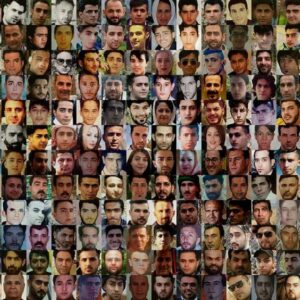
On 28 July 1988, Ayatollah Khomenei issued a “fatwa” ordering the execution of leftist political prisoners held in Iranian jails. Ebrahim Raisi was appointed to Khomenei’s “death committee” to carry out the fatwa in Evin and Gohardasht prisons. Between August and September 1988 over 3000 political prisoners were massacred. No one has been prosecuted or convicted in Iran for these widely documented atrocities. Indeed, in the case of Raisi, he was promoted to Deputy Chief Justice, Attorney General, and then Chief Justice of Iran. Raisi is the current Iranian president.
Some three decades after the prison massacres, in October 2019, Kaveh Moussavi received information that Hamid Noury, an Iranian citizen, was due to travel to the European Union. It was alleged that Noury was suspected of involvement in the prison massacres, reporting directly to Raisi’s death committee in Gohardasht prison. Kaveh Moussavi, Dr Mooney, and a team of lawyers set to work on an intense investigation. In just three weeks, they compiled a dossier of evidence, and detailed legal representations, which was submitted to the Swedish War Crimes Unit and the Prosecutor General. As a result, on 9 November 2019, Noury was arrested on arrival at Stockholm’s Arlands Airport. Noury was subsequently indicted on charges of mass murder and crimes against international law, for his alleged part in the 1988 prison massacres. Hundreds of witnesses testified at Noury’s trial, between August 2020 and April 2021. The verdict is expected to be announced in July 2022.
At this event, the speakers will talk about international criminal law and universal jurisdiction principles, and the wider legal and political significance of the trial.
Read more: https://www.law.ox.ac.uk/events/hamid-noury-case-legal-and-political-perspectives