The Islamic Republic bears primary responsibility as the principal cause and instigator of the war that commenced on 28 February. It is accountable for the loss of Iranian lives and for all damage inflicted upon our country.
Since its inception, the Islamic Republic’s interventionist foreign policy—pursued under the guise of exporting the revolution, advancing anti-Western agendas, and calling for the destruction of Israel—together with the establishment of proxy forces as ideological instruments of influence across the Middle East, its interference in the internal affairs of regional states, its nuclear adventurism over the past two decades, and its sustained support for state-sponsored terrorism, have collectively laid the groundwork for the present conflict. All such actions have consistently undermined Iran’s national interests and jeopardized its sovereignty and territorial integrity.
The regime’s irresponsible conduct in negotiations with the United States following the return of Mr. Trump to power, the persistent war-inciting rhetoric of Ali Khamenei and commanders of the Islamic Revolutionary Guard Corps (IRGC), its failure to cooperate with the International Atomic Energy Agency, and its disregard for established international mechanisms—alongside the organized repression and mass killing of tens of thousands of Iranian citizens during the peaceful January uprisings—have constituted key catalysts for the military actions undertaken by the United States and Israel.
In the aftermath of the twelve-day war, officials of the Islamic Republic have repeatedly called for a revision of the country’s defense doctrine, the pursuit of nuclear weapons capability, and withdrawal from international nuclear safeguard frameworks. To break its structural deadlock, Ali Khamenei and the hardline faction have chosen war over engaging with the international community. This reflects a governing doctrine in which the preservation of the system of Velayat-e Faqih takes precedence over the national interests of Iran and the welfare of its people.
At present, two distinct conflicts are unfolding within Iran: the struggle of the Iranian people against the Islamic Republic, and the military confrontation between the United States and Israel on one side and the Islamic Republic on the other. While there may be areas of overlap between the objectives of the Iranian people and those of the United States and Israel, they are not identical. The Islamic Republic represents both a threat to international security and to Israel, and a violator of the sovereignty and fundamental rights of Iranian citizens. It is a non-conventional regime that neither adheres to the norms of international law governing relations among states nor upholds its obligations toward its own people. For more than four decades, it has waged a relentless campaign of repression against the Iranian population, responding to legitimate demands and fundamental human rights claims with violence, executions, and systematic abuse.
The strategic objective of the United States in this conflict appears to be the elimination of the Islamic Republic’s nuclear, proxy, and missile capabilities, rather than regime change. By contrast, the clear and enduring demand of most of the Iranian people is a comprehensive transition from the Islamic system to a democratic order. A central concern for the Iranian people and the pro-democracy opposition is the extent to which the outcome of this conflict may advance that objective.
Over the past three weeks, both the Iranian people and the international community have witnessed how IRGC commanders have escalated regional tensions through violations of the sovereignty of neighboring states, without due regard for the consequences for Iran. Experience has demonstrated that the preservation of national infrastructure and the safety of Iranian citizens are not priorities for these actors. Indeed, as they have repeatedly indicated, they are prepared—if deemed necessary—to pursue a “scorched earth” policy to ensure the survival of the regime.
Nevertheless, irrespective of the course of action pursued by the IRGC, a critical question must also be directed toward the United States and Israel: at what cost do they intend to secure victory in this conflict? Under no circumstances should their campaign against the Islamic Republic devolve into a war against Iran as a nation or its people. While targeted strikes against military installations and instruments of repression may contribute to weakening the regime and empowering the Iranian people, attacks on energy infrastructure and public assets directly harm civilians and erode the country’s long-term resources. Such actions risk undermining alignment with the aspirations of the Iranian people and may ultimately strengthen the position of the Islamic Republic.
If the Islamic Republic has demonstrated a pattern of irresponsibility, it is incumbent upon the governments of the United States and Israel to recognize the will of the Iranian people and to distinguish clearly between the regime and the population. The legitimacy of any military strategy in this context depends upon avoiding an uncertain outcome that could lead to the disintegration of Iran as a state, and upon maintaining a clear distinction between dismantling the ruling system and preserving the nation itself.
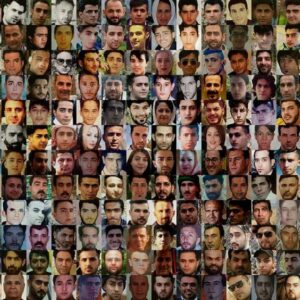
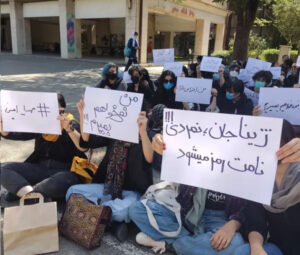
The ITCl reiterates that the Islamic Republic has, over the course of its 47 years in power, consistently failed to safeguard the national interests, as well as the lives and property, of Iranian citizens. Even amid the current conflict, it continues to threaten, detain, and execute civil society actors and human rights defenders. There are credible concerns that, following the cessation of hostilities, the regime will initiate a campaign of reprisals against its opponents under the pretext of alleged collaboration with Israel. Accordingly, any ceasefire, agreement, or political settlement involving the Islamic Republic must include explicit guarantees for the protection of political prisoners and the security of the Iranian population. The brutal mass killings carried out over a two-day period in January must not be forgotten.
In these grave circumstances, the ITC underscores that any resolution of the conflict that results merely in an agreement with the Islamic Republic will not address the fundamental grievances of the Iranian people. Their struggle to bring an end to Islamic rule and to establish a democratic system—an aspiration consistently expressed over the past two decades—will persist. The conduct and conclusion of this war by the United States and Israel must be aligned with the will of the Iranian people and must create conditions conducive to their meaningful participation in determining their own future. Failing this, neither regional nor global security will be restored, and the cycle of violence will continue.
Lasting peace in Iran, the Middle East, and the wider international community is contingent upon a transition from the Islamic Republic to a democratic system of governance in Iran.
For the Secretariat of the Iran Transitional Council
Dr Mohammad Farsi, MBE
ITC International Relations
25 March 2026